Deciding on skateboard trucks might appear intricate, yet usually, purchasing from a reputable skateboard truck brand and ensuring the accurate size for your deck should lead to satisfaction with your selection. Buying a complete skateboard means the trucks already in place are properly proportioned with the deck’s width.
Overview

Understanding the Components of Skateboard Trucks
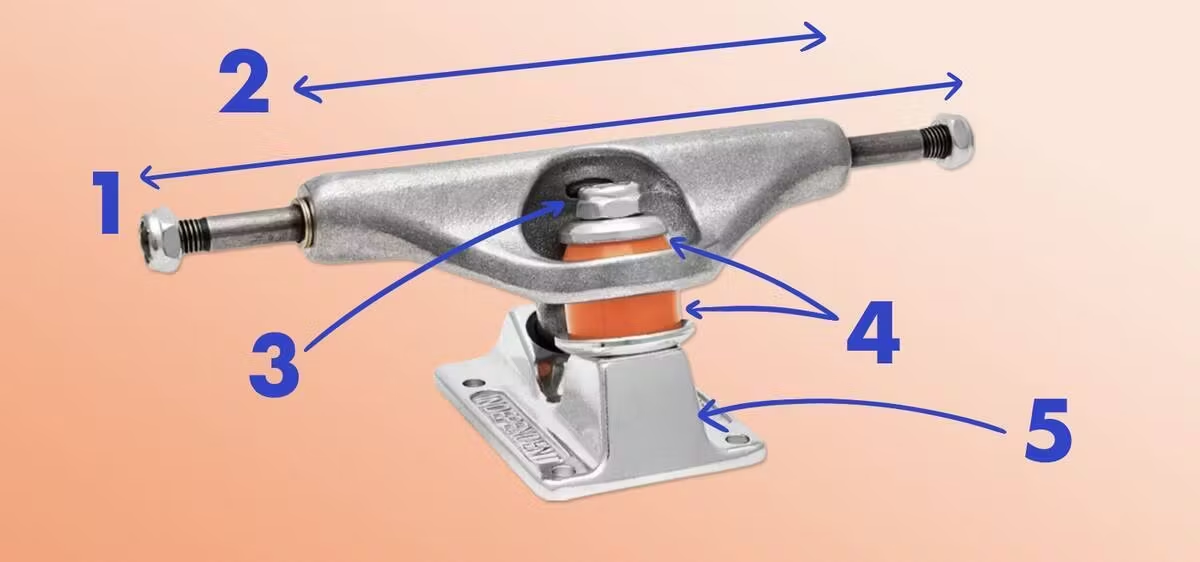
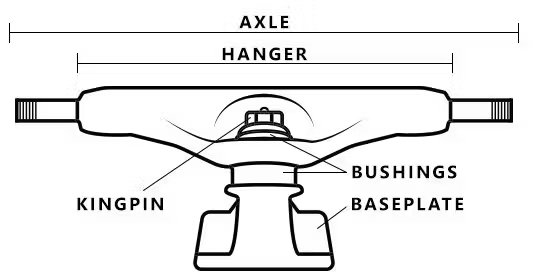
Let's cover the essentials before looking into more granular information. What are skateboard trucks? Essentially, they are the metallic T-shaped parts fixed to the underside of your skateboard deck, tasked with securing the wheels. The two primary components, the baseplate and hanger, swivel around each other. They're connected via the kingpin, which also secures the bushings. Let's dissect the central features of a skateboard truck:
Baseplate
The flat metal segment affixed to the deck through 4 bolts is the baseplate. It distributes the skater’s weight uniformly across the truck, providing stability, and spreads the impact of landings onto the deck. Within the baseplate are pivot cups that let the hanger swivel, thereby influencing turning smoothness. Acting as the direct link between the deck and hanger, the baseplate is crucial to the truck and your setup overall.
Hanger
The largest constituent of a skateboard truck is the hanger, a rectangular bar tapering to a triangular shape at the swivel point that fits into the pivot cup on the baseplate. The hanger interacts with rails, copings, and ledges, hence it is critical for executing grinding tricks.
Axle
The axle runs inside the hanger and features threaded ends where nuts secure the wheels. As time passes, the outer threads may wear (especially if you frequently perform rail stands), but they can be restored using suitable equipment. Numerous T-tools come equipped with 5/16" axle re-threaders. If past truck maintenance included re-threading, having a skate tool with a re-threader is beneficial. Browse our options:
Kingpin
The kingpin is a thick bolt that threads through the middle of the truck, connecting all the various parts. The tightness of your trucks can be adjusted with the kingpin nut. Though kingpins can fracture due to stress, they can still be replaced.
Truck Bushings
Acting as elastic cushions, bushings sit between the baseplate and the hanger to transfer pressure from your feet to the hangers. This affects the manoeuvrability of your skateboard setup. The bushings’ hardness impacts your turning capacity:
- Hard bushings: They lend more rigidity and stability, advantageous if trucks wobble. These require more exertion for turning.
- Soft bushings: Optimal for carving and cruising, these appeal to skaters who prefer easily responsive loose trucks.
Learn about the fitting of skateboard bushings or browse for new bushings, washers, or hardware:
Having acquainted yourself with skateboard truck components, let’s explore important considerations when opting for the best trucks for your setup.
Choosing Skateboard Truck Sizes & Measuring Guidelines
Skateboard truck dimensions involve width and height. The following overview assists in selecting appropriately-sized skateboard trucks.
Width of Skateboard Trucks
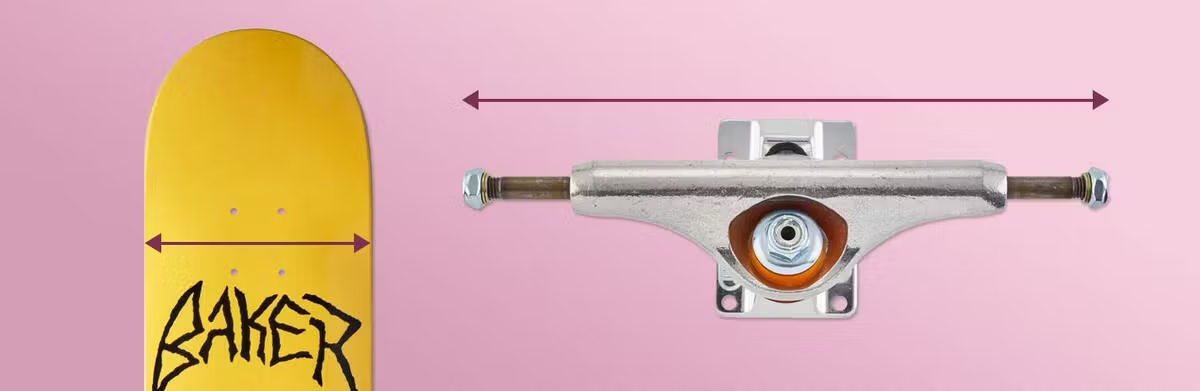
It's crucial to align the truck width with your deck's width. In skateboarding, variations in truck width relative to your deck shouldn't be significant. Narrow trucks may feel unstable, while overly wide ones might hinder foot placement and complicate flip trick execution.
Brands size trucks according to hanger width, excluding axle width. However, axle width determines the full width of a truck, aligning it with your deck is crucial.
You don’t need a size conversion chart for skateboard trucks when purchasing from SkatePro, as we indicate the individual truck's axle width directly.
The Height of Skateboard Trucks

Truck height describes the elevation from baseplate to axle centre, thus defining the separation between deck and trucks. Choosing truck height entails considering deck-to-wheel and deck-to-ground distances.
Often classified as high, medium, or low for ease, the characteristics of these heights include:
- Low Trucks (46-49 mm): With the deck near the ground, this setup is controllable by beginners, kids, or those with smaller frames due to increased stability. Avoid wheel diameters exceeding 53 mm unless using risers.
- Mid Trucks (49.5-53.5 mm): Balancing attributes of highs and lows, mid trucks, between 49.5-53.5 mm, suit most skaters. For wheels over 56 mm, risers are advisable.
- High Trucks (53.5-60mm): Providing greater elevation, larger wheels, ideal for cruising and carving setups with added wheel-deck clearance. They offer a stable platform for freestyle skateboarding moves like rail stands.
The truck heights in our selection are always clearly stated.
An Overview of Factors when Selecting Skateboard Truck Height
Truck height hinges on individual preference and physical attributes. Consider these aspects when deciding between various truck heights:
- Wheel clearance: Determined by the wheel diameter and truck height, anyone keen on carving and profound turns needs more clearance compared to those favouring tighter, stable trucks. Ensure sufficient clearance if preferring looser truck settings.
- Pop angle: Influenced by truck height, lower ones provide a snappier pop, whereas higher trucks offer greater leverage for impressive tricks. The smaller angle on lower trucks favours quick reactions, while a steeper angle on higher ones supports larger tricks.
- Pushing: Higher trucks create a broader gap between the pushing foot and the deck-foot, necessitating greater effort for longer distances.
- Tricks: Height impacts trick performance. High trucks aid balance in rail stands, while agile low trucks better suit flatland flips.
- Truck weight: Bigger trucks are heavier.
- Personal height: Tall skaters with long legs find high trucks easier to manage compared to shorter individuals.
Riser Pads - A Solution for Wheel Bite Problems

Riser pads are invaluable for skateboarders experiencing wheel bites—occurring when wheels contact the deck during sharp turns. By enhancing the deck-to-wheel distance, riser pads offer an economical remedy.
Consideration of riser pads is warranted if experimenting with larger wheels or loosening trucks.
If addressing wheel bites or wishing to enhance your skateboard configuration, check our riser pad selection:
When fitting riser pads, correct hardware is essential. Consult this guide for precise bolt lengths:
Evaluating Skateboard Truck Weight: Heavy vs. Light Options
A major weight contributor of your complete skateboard is the trucks, with recent designs focusing notably on weight reduction. Efforts range from hollowing kingpins and axles to utilising novel materials.
At this juncture, the Tensor Mag Light Series claims the title of the 'lightest trucks ever', with notable trick advantages due to reduced weight. Despite less perceptible differences than other characteristics, weight remains a key consideration.
Remember, truck weight correlates with size. Higher, wider trucks inherently weigh more than smaller equivalents within the same model. Weight should be viewed alongside wheel diameter and deck width.
Tight or Loose Skateboard Trucks: How to Make Adjustments

Adjustment of skateboard trucks is achieved by turning the kingpin nut with a skate tool, spanner, or wrench. Tightening enhances stability but reduces turn ease, whereas loosening increases responsiveness and agility.
Tighten your trucks if:- Wheel bites occur during turns or tricks.
- Consistent pop is desired.
- High-speed instability is an issue.
- The front wheels are lifted for directional change
- Sharper turns are preferred
- Increased lateral movement freedom is needed
Bushing hardness also affects turning and carving, typically measured by durometer scale. Harder bushings correlate with higher durometer values and result in tighter trucks. Explore our bushings collection:
- Skateboard Bushings
- Guide: Adjust Your Trucks for Better Control
- Skateboard Bushings - Everything You Need to Know
Installing Skateboard Trucks: Step-by-Step Instructions
Attach each truck using four nuts and four bolts. It is advisable to tighten the bolts in a cross-diagonal manner to guarantee the baseplate is evenly secured.
We are consistently prepared to assist you: