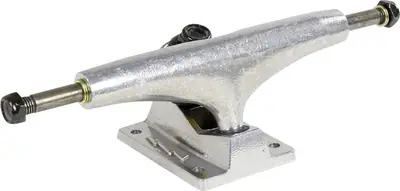
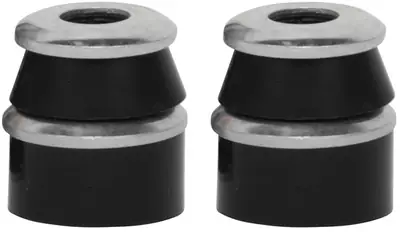
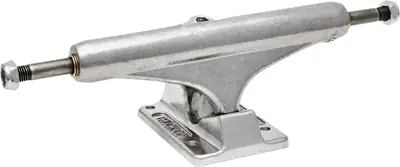
Skateboard bushings – at times referred to as truck rubber or cushioning – are crucial for your skateboard. Their hardness and shape directly influence how your board turns, responds, and feels beneath your feet.
- Bushings with greater hardness offer enhanced stability and potentially a more precise response.
- Softer bushings facilitate easier turning and steering of the skateboard with minimal effort.
Overview

Understanding Skateboard Bushings
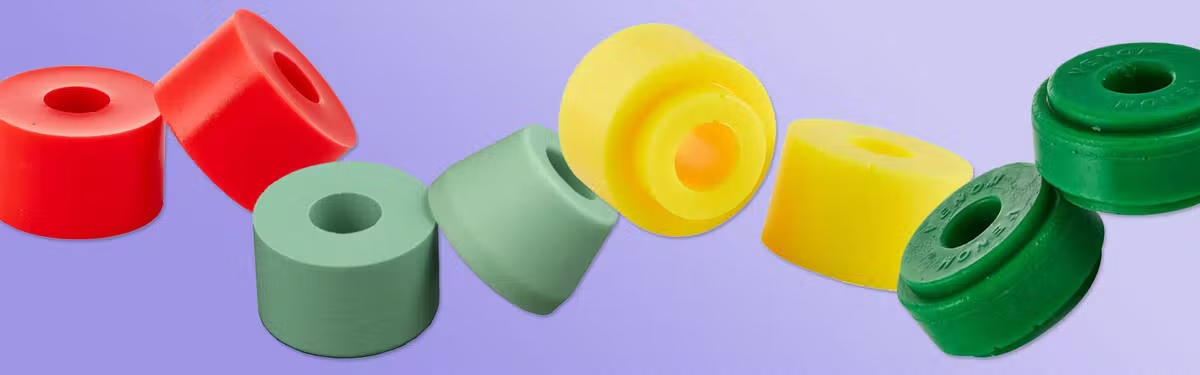
Cylindrical or conical in shape, skateboard bushings are made of urethane rubber and rest on the kingpin of the trucks. They allow for steering and control of the skateboard, playing a crucial role in the overall characteristics of the board.
Each skateboard truck houses two bushings:
- Top bushing – directed towards the ground.
- Bottom bushing – facing upwards towards the deck.
The bushings' shape adapts as you apply weight to various sides of the deck. This action causes the trucks to pivot, altering the board's direction. The degree of pivoting affects the sharpness of your turns. The effort needed to pivot the trucks is largely affected by how readily the bushings respond to your movements.
→ The firmness or hardness of your bushings establishes the equilibrium between agility, responsiveness, and stability.
The Influence of Bushing Hardness on Your Skateboard
- Softer bushings make trucks looser and simpler to turn.
- Harder bushings offer more resistance, leading to tighter and more stable trucks.
You May Require Harder Bushings If...
... your board feels excessively loose:
If you've encountered speed wobbles or feel your trucks are too loose, opting for harder bushings can provide the needed stability.
... you're dealing with wheelbite:
Harder bushings can decrease the likelihood of wheelbites. Initially, verify your truck tightness and consider the potential benefits of risers.
... the kingpin nut is fully tightened:
If threading is visible on the kingpin beyond the nut, or if the bushings seem distorted from the washer's pressure, harder bushings might be required. Tip: If you have spare washers in the correct size, placing one or two under the truck bushing washer can reduce the exposed threading.
You May Prefer Softer Bushings If...
... steering and turning initiation is difficult:
Softer bushings simplify the turning process, necessitating less effort.
... carving and cruising are your preferences:
Softer bushings allow for sharper cornering and more effective carving.
... you enjoy a loose and fluid ride:
If you appreciate a board that smoothly responds to subtle shifts, softer bushings offer that fluid, responsive control.
There are several reasons to opt for looser trucks, and some skateboarders even remove the top bushings to achieve extremely (and rattly) high flexibility (though we do not suggest this approach).
The Relationship Between Bushing Hardness and Body Weight
Your body weight influences how bushings react to your movements: heavier individuals can exert more pressure from the bushings with ease, whereas lighter individuals will require softer bushings for similar responsiveness.
We have compiled a table to recommend bushing hardness based on user weight. Remember, body weight is only one factor, and individual preferences can vary. This chart serves as a basic guide for those beginning their experimentation with different bushing hardness levels.
→ Your present bushings are your best reference point. If you are familiar with your bushings' durometer rating, you can adjust up for more hardness or down for softness.
| User Weight (kg) | Rider Weight (lbs) | Softer / Looser Setup (Durometer) | Stiffer / Tighter Setup (Durometer) |
| <65 kg | <143 lbs | 81A - 85A | 86A - 90A |
| 65 - 80 kg | 143 - 176 lbs | 86A - 90A | 91A - 95A |
| 80 - 90 kg | 176 - 198 lbs | 91A - 95A | 96A - 100A |
| >90 kg | >198 lbs | 96A - 100A | 100A |
Children's complete skateboards typically have a bushing setup balanced to suit their weight and movements. Likewise, new trucks come equipped with bushings catering to most skaters, with wider trucks often featuring slightly harder bushings than their narrower counterparts.
→ When selecting a new complete skateboard or new trucks with pre-installed bushings, give attention to the width considerations - these options are likely to work for you.
The Link Between Bushing Shapes and Performance
Varying shapes of bushings affect the truck's behaviour.
- Conical (similar to a cone): generally serves as a top bushing, providing responsiveness.
- Barrel (straight in form): commonly a bottom bushing, offering stability.
A conventional combination includes a cone-shaped bushing atop and a barrel-shaped one below for a balanced effect. Double barrels add progressive stability, while reversing this arrangement can amplify responsiveness.
Fine-Tuning Your Trucks with the Kingpin Nut
- For firmer and less responsive trucks, tighten the kingpin nut (turn clockwise).
- Loosen the nut (turn counterclockwise) to make turning smoother.
If initiating turns proves challenging and you find yourself lifting the front wheels to steer, consider loosening the trucks. Conversely, if control is difficult due to overly loose trucks, try tightening them slightly.
Recognising When Your Bushings Need Replacement
Inspect your bushings for signs of cracking, splitting, or stickiness as these can signal wear and a reduction in performance. Replace worn bushings rather than merely tightening your trucks to compensate.
If your bushings are undamaged and you appreciate the board's response, there's no need for replacement. However, worn bushing signs inevitably suggest that replacement will be necessary eventually. When that time comes, find what you need here: