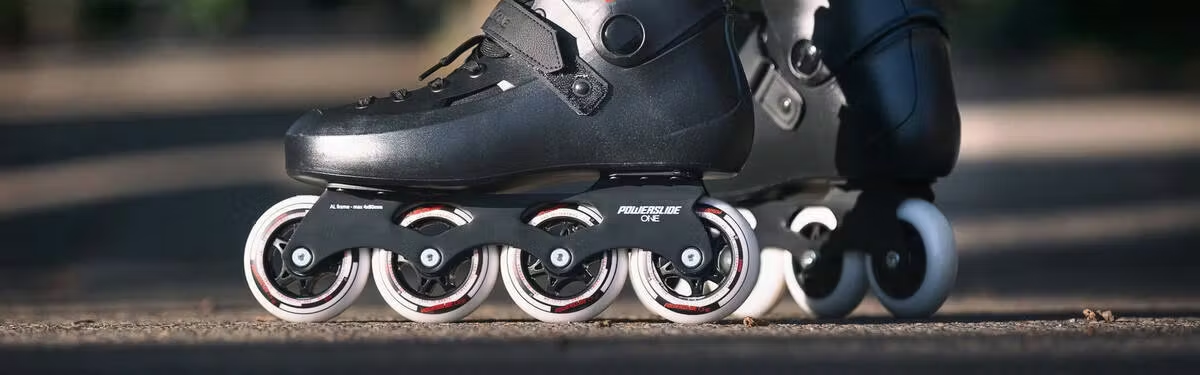
- Wheel size: Influences speed and manoeuvrability.
- Durometer: Indicates wheel hardness—affecting speed and vibration absorption.
- Rebound: The speed at which a wheel returns to its initial shape after compression.
- Grip: Determines how effectively the wheel adheres to the surface.
- Wheel profile: Influences speed and stability.
Overview

Overview
How to Select the Right Inline Skate Wheels for You
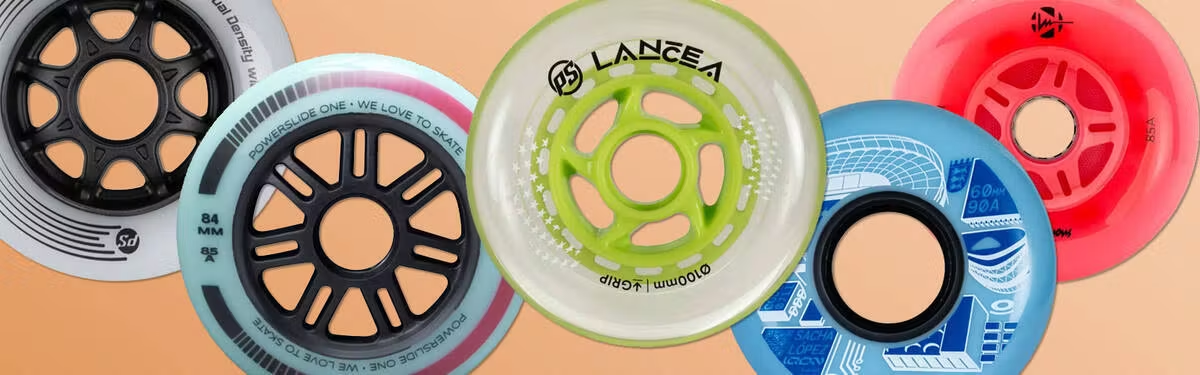
Knowing the right type of wheel for your skating style simplifies the selection process for inline skate wheels.
Regardless of the inline skate style you engage in, focusing on the wheel's size and hardness is crucial. Align these characteristics with the surfaces you will skate on.
| Inline Skating Style | Properties | Size Range / Hardness Range |
| Fitness Skate Wheels |
Smooth roll Power transfer
|
80-110 mm 80A-88A |
| Freeskate Wheels |
Agile and fast |
75-110 mm 84A-88A |
| Aggressive Skate Wheels |
Stable and shock-absorbing Small size Flat or round profiles |
55-80 mm 88A-95A |
| Roller Hockey Wheels |
Agile and grippy Good acceleration Some are indoor-specific |
65-84 mm 72-84A
|
| Speed Skate Wheels |
Maximum speed Indoor / rinks / outdoor / roads |
100 mm-125 mm 83A-90A |
Are Your Inline Skate Wheels Compatible?
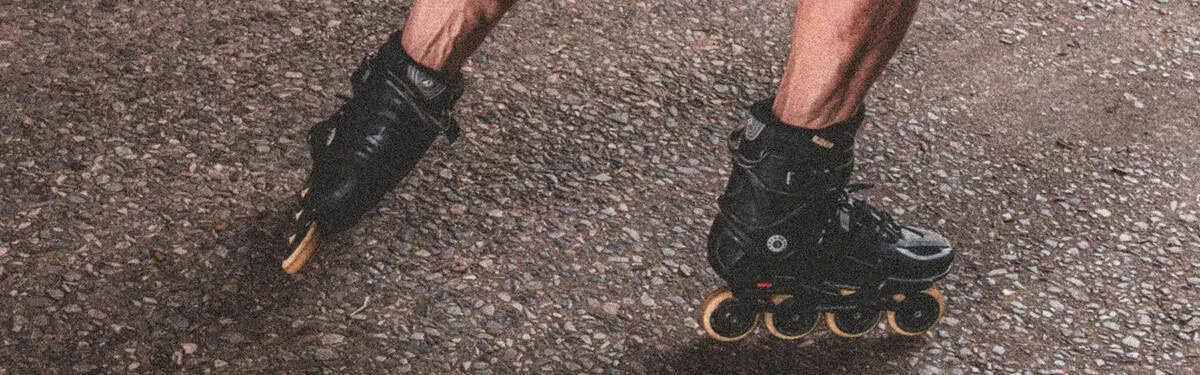
With a standard width of 24 mm, inline skate wheels are easily matched to your skates. Any wheel smaller than or equal to the specified maximum diameter for your rollerblade frames is compatible.
By understanding the elements such as hardness, rebound, grip, and profile, you can select wheels that not only fit but also optimise your inline skates’ performance.
Delve deeper into the details, or explore our selection right away:
The Importance of Diameter in Inline Skate Wheels
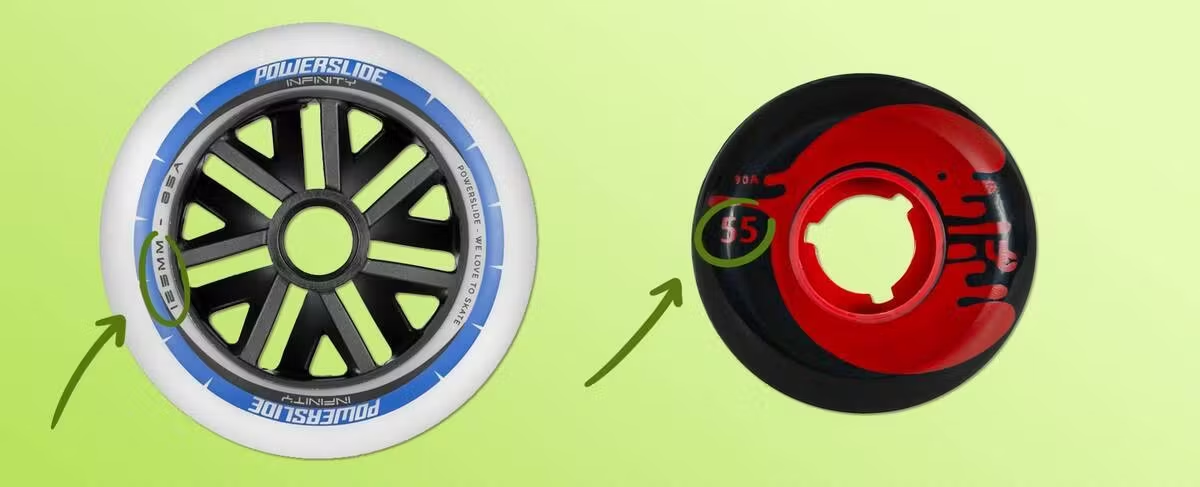
The diameter, measured in millimetres (mm), is usually marked on the wheel’s side. If uncertain, you can measure it yourself.
Diameter profoundly affects how inline skate wheels behave. It influences aspects like acceleration, speed, manoeuvrability, and directional stability.
Below is how diameter impacts the performance of your skates:
- Smaller diameter: Enhances acceleration and control.
- Larger diameter: Increases top speed and stability.
Wheel diameter should align with your skating style. Our chart below provides general guidance for each style:
Inline Skate Wheels Size Chart
| Inline Skating Style | Size Range |
| Aggressive Skate Wheels | 55-80 mm |
| Roller Hockey Wheels | 65-84 mm |
| Fitness Skate Wheels | 80-110 mm |
| Freeskate Wheels | 75-110 mm |
| Speed Skate Wheels | 100-125 mm |
Understanding Durometer: Hardness of Inline Skate Wheels
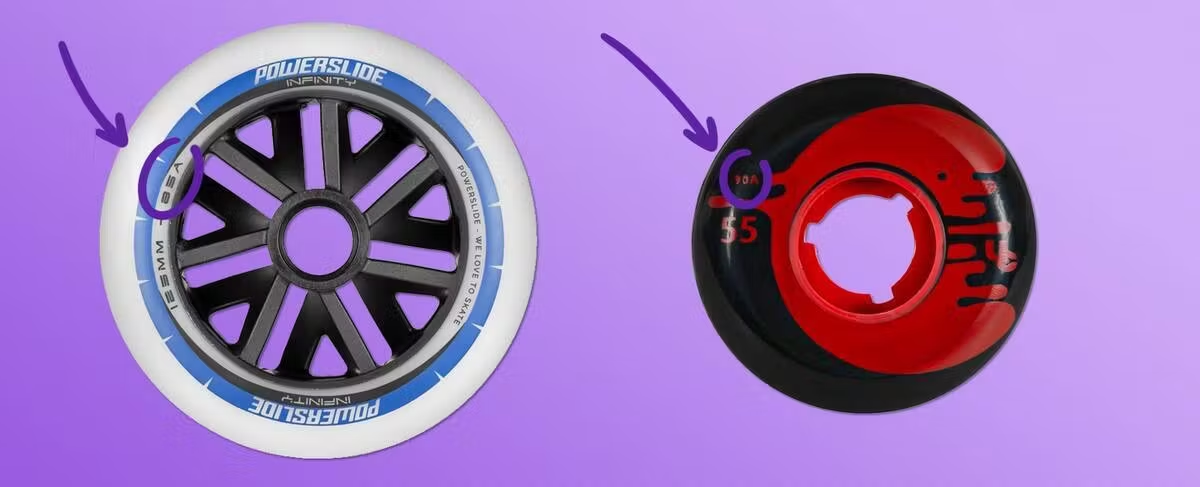
Durometer indicates the relative hardness of rollerblade wheels, measured on the A-scale. You'll find a number followed by an A (e.g., 82A), where higher numbers mean a harder wheel.
The A-scale helps quickly identify wheel hardness, with the rating usually marked on the wheel.
Your skating style dictates the ideal wheel hardness. Below is our guideline for the suitable hardness for each skating style:
Inline Skate Wheels Hardness Chart
| Inline Skating Style | Hardness Range |
| Aggressive Skate Wheels | 88A-95A |
| Roller Hockey Wheels | 72A-84A |
| Fitness Skate Wheels | 80A-88A |
| Freeskate Wheels | 84A-88A |
| Speed Skate Wheels | 83A-90A |
Wheel hardness affects performance on various surfaces. Consider hardness before purchase, as it significantly impacts skate performance.
Hard vs. Soft Inline Skate Wheels
Understanding hardness is vital—especially if you’re choosing between two wheels of different hardness levels.
Wheel hardness influences your rollerblades as follows:
Advantages of harder wheels- Faster speeds
- Higher durability
- Reduced grip
- Less vibration absorption
- Enhanced grip
- Better shock absorption
- Slower speed
- Lower durability
The general principle: softer wheels offer better vibration absorption and grip, while harder wheels offer less absorption and grip.
Alternative Hardness SCALES
Some brands use the footprint scale for wheel hardness. Here's the conversion to the A-scale:
- F0 - approximately 88A
- F1 - approximately 85A
- F2 - approximately 84A
- F3 - approximately 83A
A Look at the Rebound of Inline Skate Wheels
Rebound refers to how quickly a wheel returns to its original shape after compression. With each stride, a high-rebound wheel snaps back to shape, aiding speed. Low rebound means energy is absorbed rather than transferred into speed, thus greatly impacting your speed.
High-quality wheels often feature high rebound, noted as SHR urethane (Super High Rebound). Though no universal rebound comparison exists, cheaper wheels often have lower rebound, while pricier ones have higher rebound.
The Role of Grip in Inline Skate Wheels
Wheel grip is affected by the polyurethane (PU) formula and the wheel's hardness.
The relationship between hardness and grip is as follows:
- Softer wheels: Better grip.
- Harder wheels: Less grip.
Your surface affects wheel grip. Slippery surfaces demand more grip to prevent sliding, whereas rough surfaces require less.
When on rougher surfaces, harder wheels are feasible without losing necessary traction.
Exploring Wheel Profiles in Inline Skate Wheels
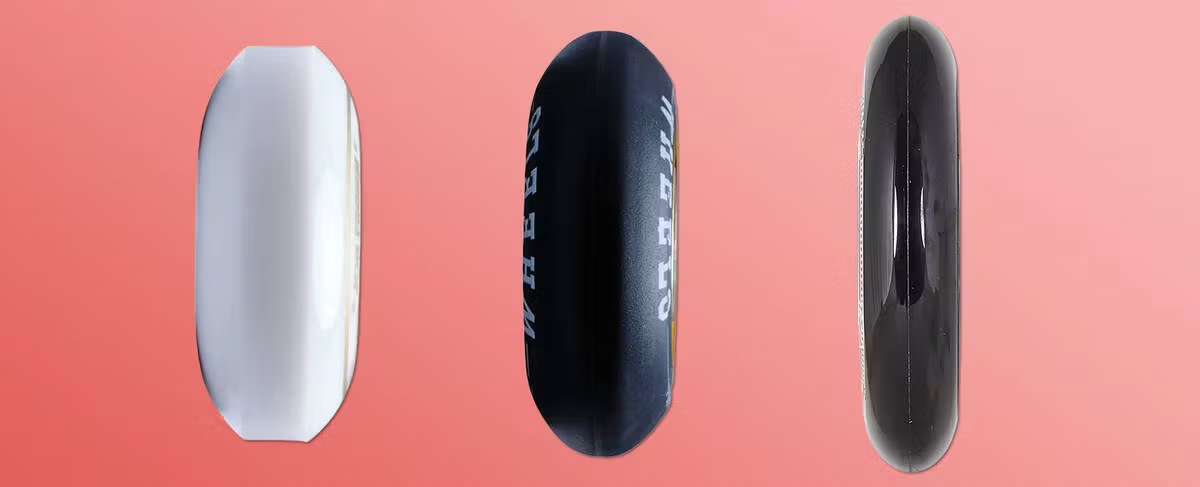
Inline skate wheels range from flat to pointy profiles, influencing the contact area. Flat profiles have a larger contact patch, while pointy ones have smaller patches.
Pointy wheels are versatile, appearing in fitness and speed skates, offering efficiency through minimal friction. They dominate the market for their versatility and speed characteristics.
Flat wheels are reserved for aggressive skating, offering stability for landing tricks over speed.
Rounded wheels, used in freeskating and aggressive skating, provide control, beneficial for beginners due to their forgiving nature.
Understanding the Hubs of Inline Skate Wheels
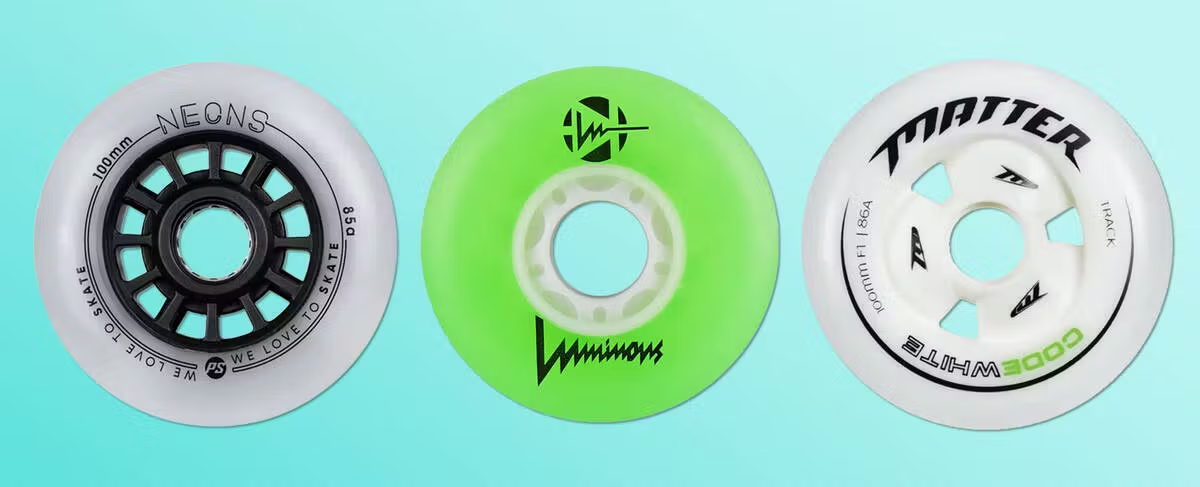
The hub sits at the wheel's core, housing the bearings and usually made from hard plastic or aluminium. While aluminium hubs are stronger and more durable, they may be heavier.
Types of hubs include:
- Solid core: Very strong but heavier.
- Spoked core: Lighter but less durable.
- Hollow core: A balance of low weight and durability.
For the best performance, inline skate wheels should be durable and lightweight, requiring less energy and reducing fatigue.
Maintaining Your Inline Skate Wheels
To prolong your wheels’ lifespan, implement a consistent maintenance routine. As wheels wear out faster than other skating parts, regular attention saves money. Follow a consistent wheel rotation schedule to maintain their shape and performance.
The natural wear pattern shifts the wheel's centreline, causing a flat diagonal surface. When this occurs, it’s time for wheel rotation.
To maintain consistent shape, refer to our wheel rotation guide for assistance:
If you're unsure about whether it's time to replace the wheels on your inline skates, we recommend consulting our guide on the matter:
Should you require assistance with fitting your wheels, this guide will be helpful:
For advice on general upkeep of inline skates, our comprehensive online guide is filled with practical tips, accessible here:
... Bears On Bearings?
We offer specialised guides on wheel bearings, with all the essential insights into their function:
If your ride isn't as smooth as before, your bearings might be in need of attention. Consider a detailed cleaning and fresh lubrication: