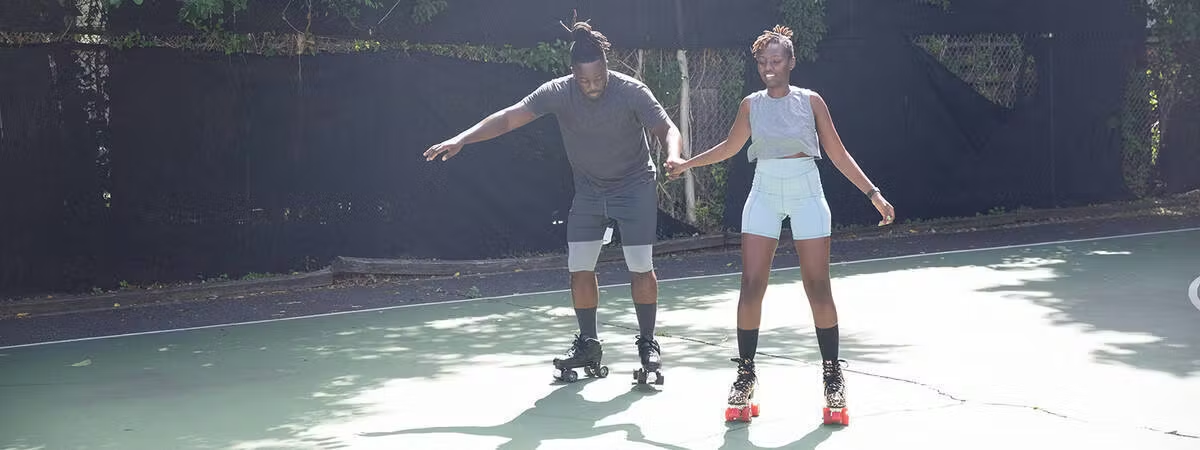
As a novice on quad skates, building confidence begins with mastering how to brake, manage your speed, and utilise toe stops safely and efficiently. This article covers fundamental techniques such as the T-stop, Duckfeet, and the Plough. It also details practical applications of toe stops, including ascending stairs and navigating kerbs.
Whether you've just put on your inaugural pair of quad skates or aim to refine your basic roller skating skills, this guide provides helpful tips for new skaters.
Executing T-Stops on Roller Skates
The T-stop is the primary braking technique on roller skates. To execute this, position one skate perpendicular behind the other, slightly dragging it along the ground to decelerate or halt safely.
It's advisable for beginners to practise on a smooth, flat surface to prevent tripping or catching wheels. Wearing protective equipment such as knee pads, wrist guards, and a helmet is highly suggested, as novices tend to overcorrect and wobble. Starting slow is imperative; there's no need for speed initially, with the emphasis on balance and correct form.
Watch this video to learn how to execute T-stops on quad skates:
The T-stop is a fundamental skill that every quad skater should master to maintain control, as it lays the groundwork for more sophisticated stops. This technique is the safest and most efficient way to manage speed and prevent mishaps.
Downhill Roller Skating Techniques to Maintain Control
Skating downhill can be exhilarating, but prioritising safety is crucial. Controlling your velocity is vital. Here are a few tips for a smooth descent:
- Begin on gentle inclines to build confidence, maintaining a proper stance by bending your knees, keeping your weight centred, and leaning slightly backwards.
- Employ the T-stop to slow to a stop.
- To manage speed, apply the “Plough” method or “Duckfeet” (demonstrated in the video).
- Control momentum by weaving side to side or using the edges of your wheels to lessen speed.
- Always don protective gear, including a helmet, wrist guards, knee pads, and elbow pads.
By following these methods, you can securely enjoy downhill skating while keeping a handle on your speed.
Utilising Toe Stops on Roller Skates
Toe stops, found at the front of most roller skates, are rubber or polyurethane blocks that enable skaters to slow down, stop, and manoeuvre with greater ease.
To use them effectively, bend your knees and lean slightly backward for balance. Gently drag the toe stop to decrease speed and push it firmly into the ground whilst leaning slightly forward to come to a complete stop.
Toe stops can also serve as a pivot for sharp turns. Beginners are encouraged to practise on flat surfaces to become comfortable with balance and pressure. Toe stops are a simple yet vital tool for enhanced control and confidence whilst skating.